
The Youth Soccer Training Blueprint: From Skill to Game Impact
The Youth Soccer Training Blueprint: From Skill to Game Impact
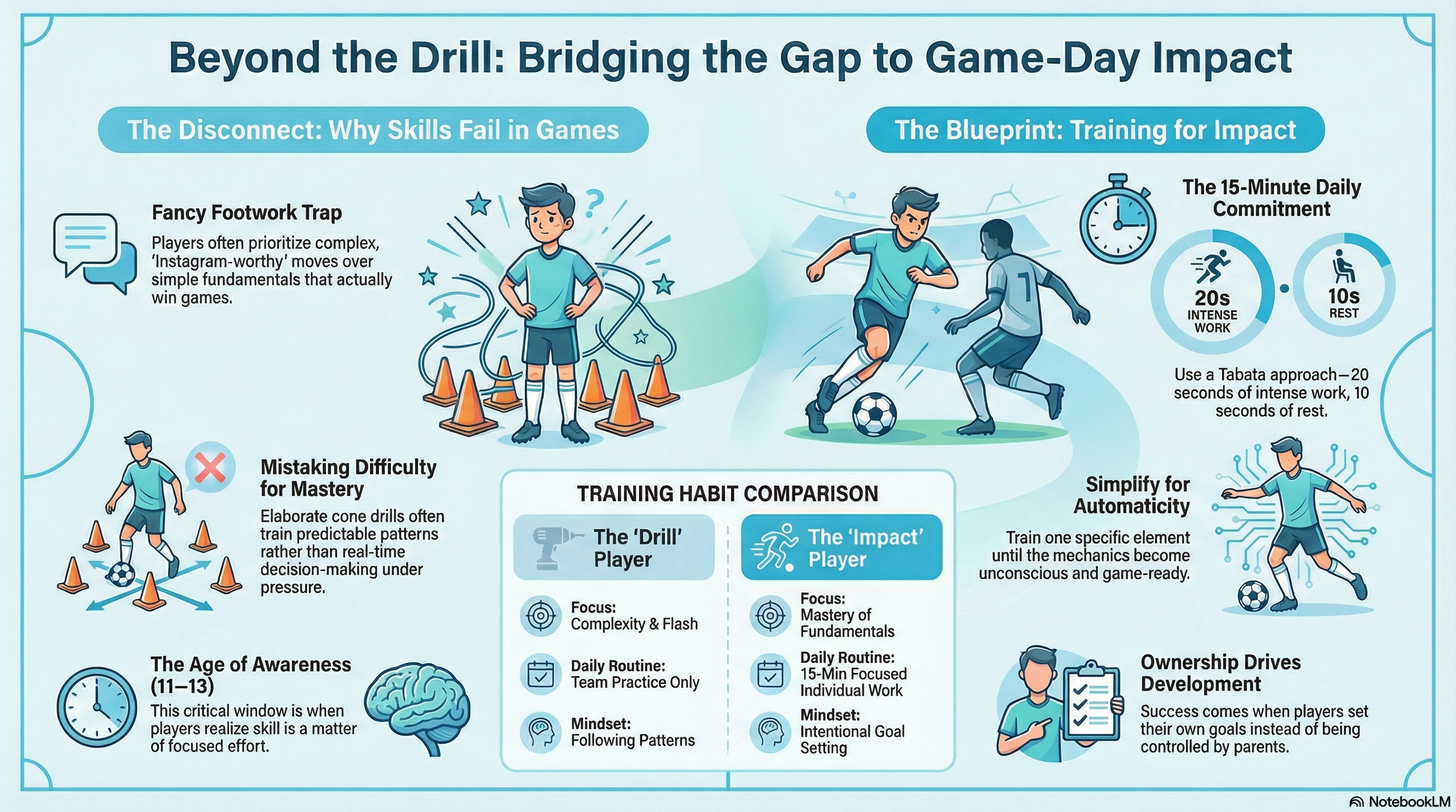
Why “Talented” Players Disappear in Games
Looking good in drills doesn’t mean a player is game-ready
Most youth players train complexity instead of mastering fundamentals under pressure
Real improvement comes from focused training on one skill at a time
Awareness, confidence, and decision-making matter more than fancy moves
Just 15 minutes of intentional daily training can change game performance
The best players take ownership of their development—with parents supporting, not controlling
👉 This blueprint breaks down how to turn practice skills into real game impact—without burnout, pressure, or wasted training time.
Why the most "talented" players on your team often disappear in actual games—and what to do about it.
If you've ever watched a youth soccer player nail every drill in practice, only to freeze up or overthink every touch during a real game, you're not alone.
It's one of the most frustrating patterns in youth soccer development: players who look incredible in controlled training environments but struggle to translate those skills into meaningful game impact.
The problem isn't lack of talent. It's not even lack of effort.
The problem is mistaking complexity for mastery.
The Fancy Footwork Trap
Here's what I see constantly: players who can execute a stepover-to-scissor-to-another-stepover combo, but completely lack the change of speed or spatial awareness to actually beat a defender in a game.
They'll receive a ball, attempt some elaborate turn they saw on Instagram, and lose possession—when simply opening their hips and shoulders to the field would have given them a clean one-touch outlet to a teammate making a run.
They've trained complicated moves. They haven't mastered the simple fundamentals that win games.
This is the core disconnect between training and game performance: players focus on what looks impressive rather than what actually works under pressure.
The Real Story: Jacob's Transformation
Let me tell you about a player I worked with—we'll call him Jacob.
Jacob looked great in training. Technically gifted. But he had a habit of coasting through drills, not really pushing himself, almost like he was hiding something.
In games? He'd hesitate. Overthink. Make things harder than they needed to be.
The breakthrough came when I stopped making excuses for him—but also stopped punishing him for mistakes.
When he'd mess up a drill and get down on himself, I'd encourage him to keep going and focus on the positive. I gave him a training notebook to track his best work, not his failures.
The shift was psychological, not technical.
Once Jacob started trusting himself—once he realized he didn't need to hide his deficiencies behind complexity—he got faster, cleaner on the ball, and dramatically more effective in games.
He stopped trying to do everything and started doing the right things with confidence.
Why Most Training Drills Fail in Game Situations
You've probably seen them: elaborate cone setups where players run through 10 different moves in succession.
Stepover here, drag-back there, fake shot, Cruyff turn, all in 30 seconds.
These drills fall apart in games because they train nothing deeply.
When you stack 50 different skills into one drill, you're not actually improving change of direction OR close control OR decision-making. You're just following a pattern.
Real game improvement comes from focused, intense work on one specific element until it becomes automatic under pressure.
Want to improve change of direction? Build an entire session around it. Work it until the mechanics are unconscious.
Don't try to train everything at once. Train one thing until it's game-ready.
What Separates Players Who "Train Hard" from Players Who "Play Smart"
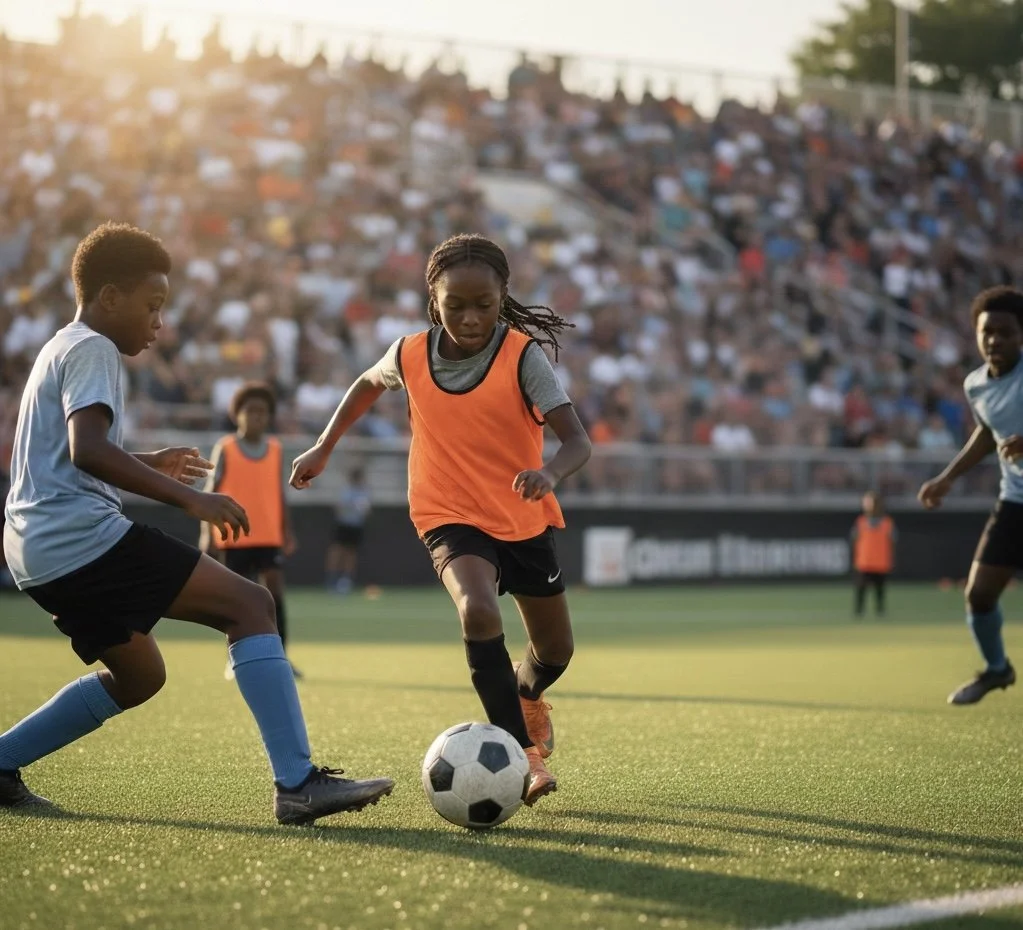
Watch any youth game and you'll spot the difference immediately.
The players who actually impact games aren't necessarily the ones who spent the most time at team practice.
They're the ones who took what they learned in practice, went home, applied it, and trained extremely hard on their own.
They're aware. They think one step ahead. They see the game unfolding before it happens.
And here's the key insight: this awareness develops between ages 11-13.
This is when players start to realize that the gap between them and older, "better" players is just a matter of degrees. Older players might be stronger and faster, but they're not necessarily more skilled.
That realization is transformative. It builds belief. And belief changes everything.

The 15-Minute Daily Commitment That Changes Everything
Most players think training means showing up to team practice 2-3 times per week.
That's not enough. Not even close.
Here's what creates immediate game-day results:
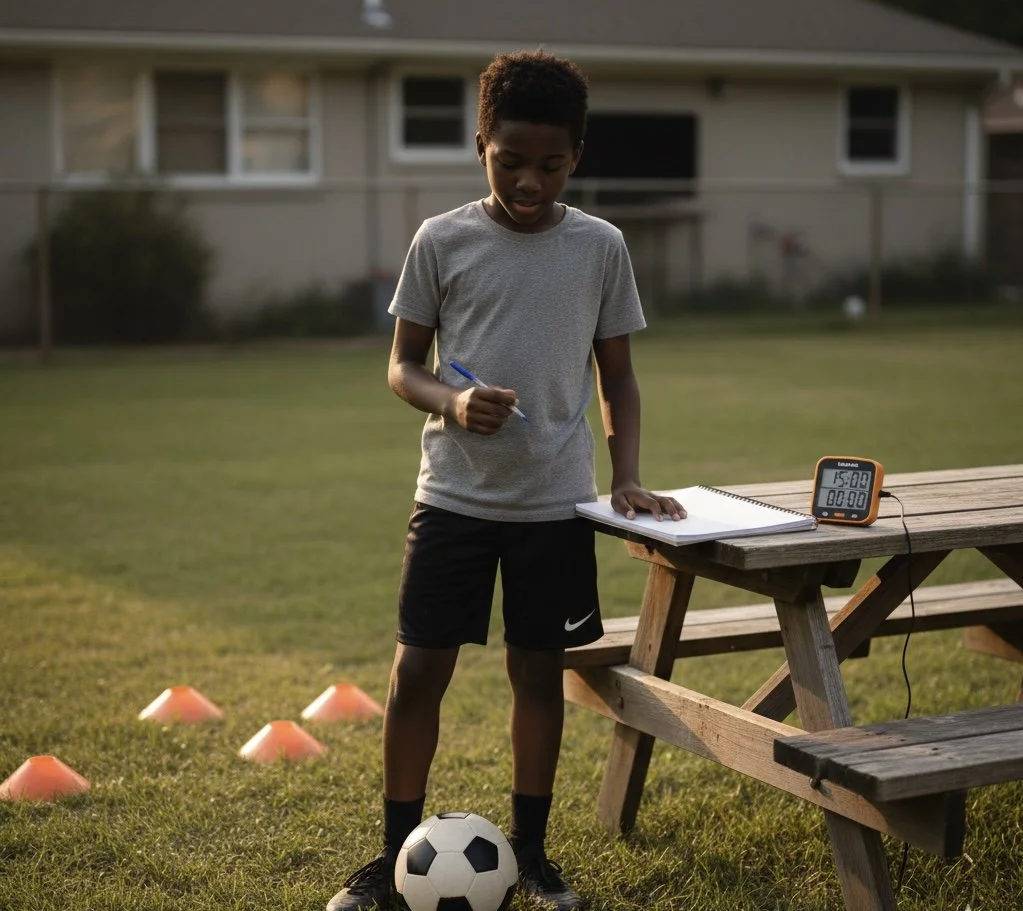
Set a goal to spend 15 minutes every single day on actual training work.
Not just touching the ball. Not just juggling while watching TikTok.
Actual, focused, intentional training.
Use a Tabata-style approach:
Set a timer
Train hard for 20 seconds
Rest for 10 seconds
Repeat
Track your reps. Measure your progress. Push yourself to beat yesterday's numbers.
This creates a level of commitment that forces real improvement. It builds the muscle memory and mental toughness that shows up when games get intense.
(Want a structured 7-day training plan that follows this exact framework? Download our free training blueprint below.)
The Parent Trap: Living Through vs. Supporting
Parents can either accelerate this development or completely derail it.
The ones who struggle most? The ones trying to live vicariously through their kids—forcing training, pushing too hard, making it about their needs instead of the player's goals.
Here's what actually works:
Help your player set their own goals. Write them down. Then hold them accountable to their commitment, not yours.
Accountability doesn't mean nagging them to train. It means supporting and encouraging them to try their absolute best—and leaving the rest.
I worked with a player—let's call her Sarah—whose parents made a bold decision. They let her take a full year off from soccer to focus on other sports.
When she came back, she was a different player. More focused. More driven.
In her words: "I felt like I'd been given a choice to play soccer."
That ownership changed everything.
The "Not Enough Time" Excuse (And What's Really Going On)
Ask most skilled players why they're not improving, and you'll hear the same excuse:
"I don't have enough time to train."
And look—it's true. Youth players are busy. School, homework, other activities, social life.
But here's the truth behind the excuse:
It's not about time. It's about time management and self-ownership.
Fifteen minutes a day. That's all it takes to build the foundation for real game impact.
The players who make that happen? They own their development. They don't wait for someone to create the perfect training environment.
They take responsibility for getting better.
The One Thing That Changes Everything
If I could give you only one piece of advice—whether you're a coach, parent, or player—it's this:
Change your mindset about what needs to be trained.
Stop chasing complexity. Start pursuing mastery of the simple, fundamental actions that win games.
Simplify. Own it. Work on it every single day.
That's the difference between being a great player and being a player who peaks at 14 and fades away.
The blueprint isn't complicated:
Master the fundamentals under pressure
Train with intention and consistency (15 minutes daily)
Track your progress and push yourself
Take ownership of your development
Let parents support, not control
The gap between skill and game impact isn't about talent. It's about training the right things, the right way, with the right mindset.
Ready to put this into action?
Download our 7-Day Youth Soccer Training Blueprint and get structured, game-focused training sessions you can start today—no fancy equipment required, just 15 minutes of focused work.
[Download Your Free Training Plan →]
What's your biggest challenge translating training into game performance? Drop a comment below—I read and respond to every one.